
 Indonesia
 English




.jpg)
The world is undergoing a major transformation toward a more responsible and sustainable economic model. As business leaders, we are no longer expected merely to generate profits, but also to create long-term value for society and the environment. In this context, the educational technology (EdTech) sector—particularly in the fields of coding and robotics—has emerged as a vital tool that bridges digital progress with environmental sustainability.
This article will explore how EdTech serves as a pillar supporting the green economy and why partnerships in this field represent a strategic move for those with a vision for future investments.
Why Will the Green Economy Become the Business Standard of the Future?
For those of you who consistently monitor the direction of global markets, the term Green Economy is certainly no longer unfamiliar. However, beyond mere environmental issues, the green economy is actually a new compass in the world of investment. It is an economic system designed to improve human well-being and social equity, while significantly reducing the risk of environmental damage and ecological scarcity.
In short, the green economy calls on us to pursue profitability without compromising the Earth’s carrying capacity. In today’s economic landscape, the strategic sectors that form the pillars of the green economy include:
Smart energy efficiency: Not merely about conservation, but a massive transition toward the use of solar panels and the adoption of electric vehicles as the new operational standard.
Renewable Energy (RE): Optimizing nature’s potential as the primary source of environmentally friendly and sustainable energy.
Circularity through waste management: Shifting from a linear to a circular mindset by applying the Recycle, Reuse, and Reduce (3R) principles to minimize the industry’s carbon footprint.
Ecosystem sustainability: Every business activity is directed toward supporting nature conservation and the wise use of resources to ensure long-term availability.
Fundamentally, the green economy is a collective vision. It is our shared effort to create prosperity for everyone, while respecting the ecological limits of our planet. For building owners and investors, understanding this principle is the first step toward ensuring that every asset managed today remains relevant and retains high value in the future.
5 Key Principles of the Green Economy
Understanding the value of investment in 2026 means understanding how a business aligns with the global ecosystem. The green economy has now become the new standard for visionary investors.
Understanding these five green economy principles will help you see why the EdTech sector is the right strategic partner:
1. The wellbeing principle
True prosperity is not measured solely by the numbers on a balance sheet, but also by the quality of life of the people within it. In the EdTech business, we invest in human capital.
By transforming your physical space into a coding learning center, you contribute to social well-being by preparing a globally competent younger generation.
2. The justice principle
A good business is an inclusive business. The green economy demands equal opportunities for every generation. Through an affordable and widespread partnership model, we ensure that digital literacy is not just for a select few, but a right for every child in Indonesia.
This is a concrete step in community empowerment that positively impacts your business’s reputation.
3. The planetary boundaries principle
The world has physical limits, but digital innovation does not. Technology education sectors such as coding and robotics are concrete examples of businesses that restore the foundations of life without harming nature.
We educate children to create future solutions—such as energy efficiency or smart waste management—through software, which has a significantly lower carbon footprint than the manufacturing industry.
4. The efficiency and sufficiency principle
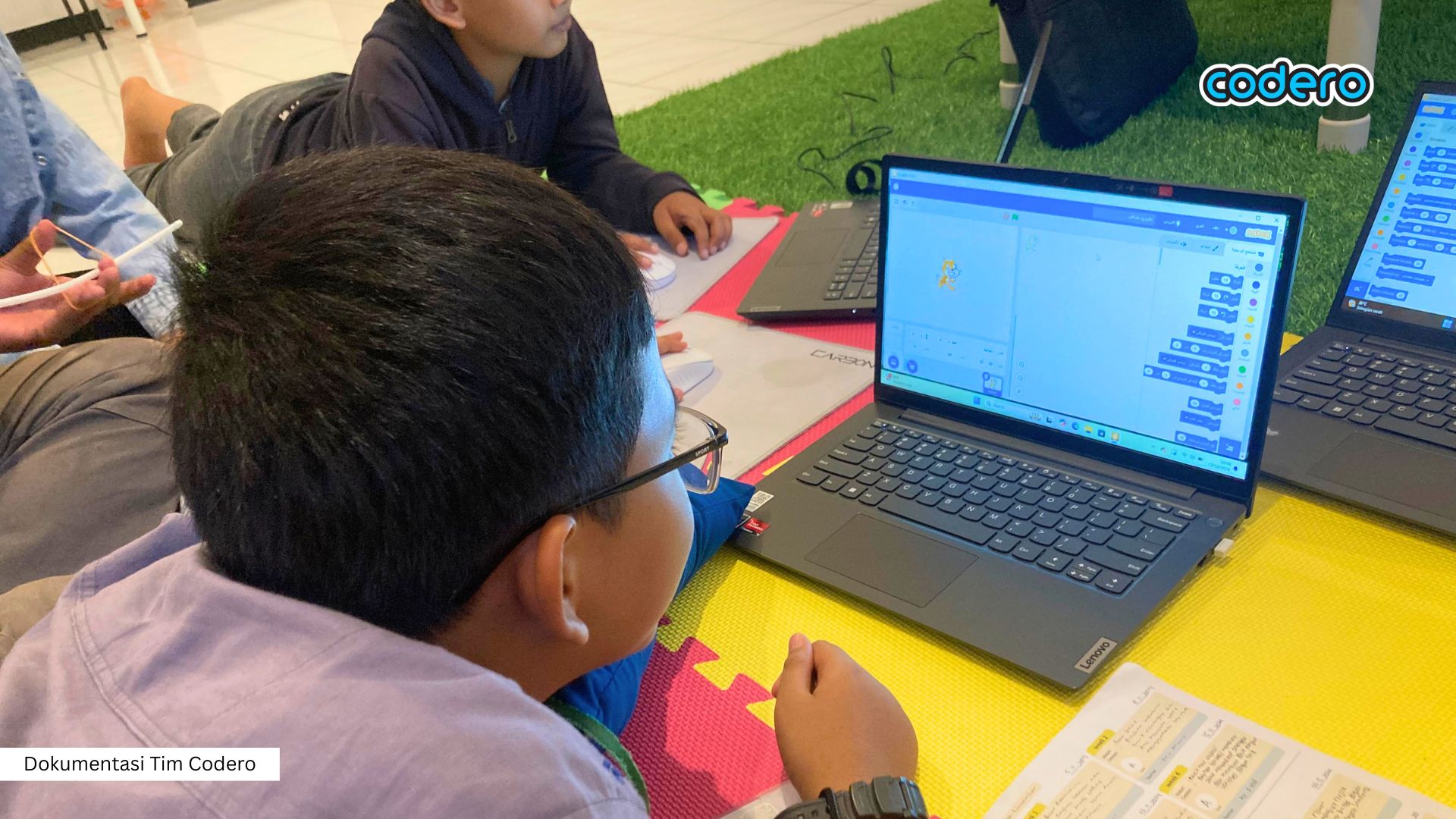
For building owners or coworking space operators, this principle is about optimization. Transforming idle space into a productive educational hub is a form of resource efficiency.
Circular and low-emission business models ensure that every square meter of your assets provides maximum benefit to the local economy without placing an excessive burden on the environment.
5. The good governance principle
A safe investment is one managed through an integrated, data-driven system. In modern partnerships, good governance means operational transparency, a scientifically standardized curriculum, and support from an accountable system. This provides investors with peace of mind that the business is operated to the highest standards of professionalism.
Why Can EdTech Support the Green Economy?
Investment in education, particularly in EdTech, is an absolute prerequisite for achieving developed-nation status and supporting the green transition. Here are the reasons why EdTech, such as coding and robotics education, serves as a catalyst for the green economy:
Providing high-quality human capital
Economic transformation requires significant investment in human capital infrastructure. EdTech equips the younger generation with the digital skills needed to manage future technologies.
Driving sustainable digital innovation
The digital economy is one of the pillars of the future economy alongside the green economy. Through coding education, digital innovations are created that can improve business operational efficiency, thereby reducing the carbon footprint.
Technology literacy as the foundation for adaptation
Knowledge of the digital economy is essential for understanding shifting market trends, including adaptation to sustainability and energy efficiency.
Operational efficiency
EdTech enables distance learning and the digitization of materials, which directly supports the principles of resource efficiency and the reduction of physical waste.
Partnership Opportunities: Collaborating for the Future
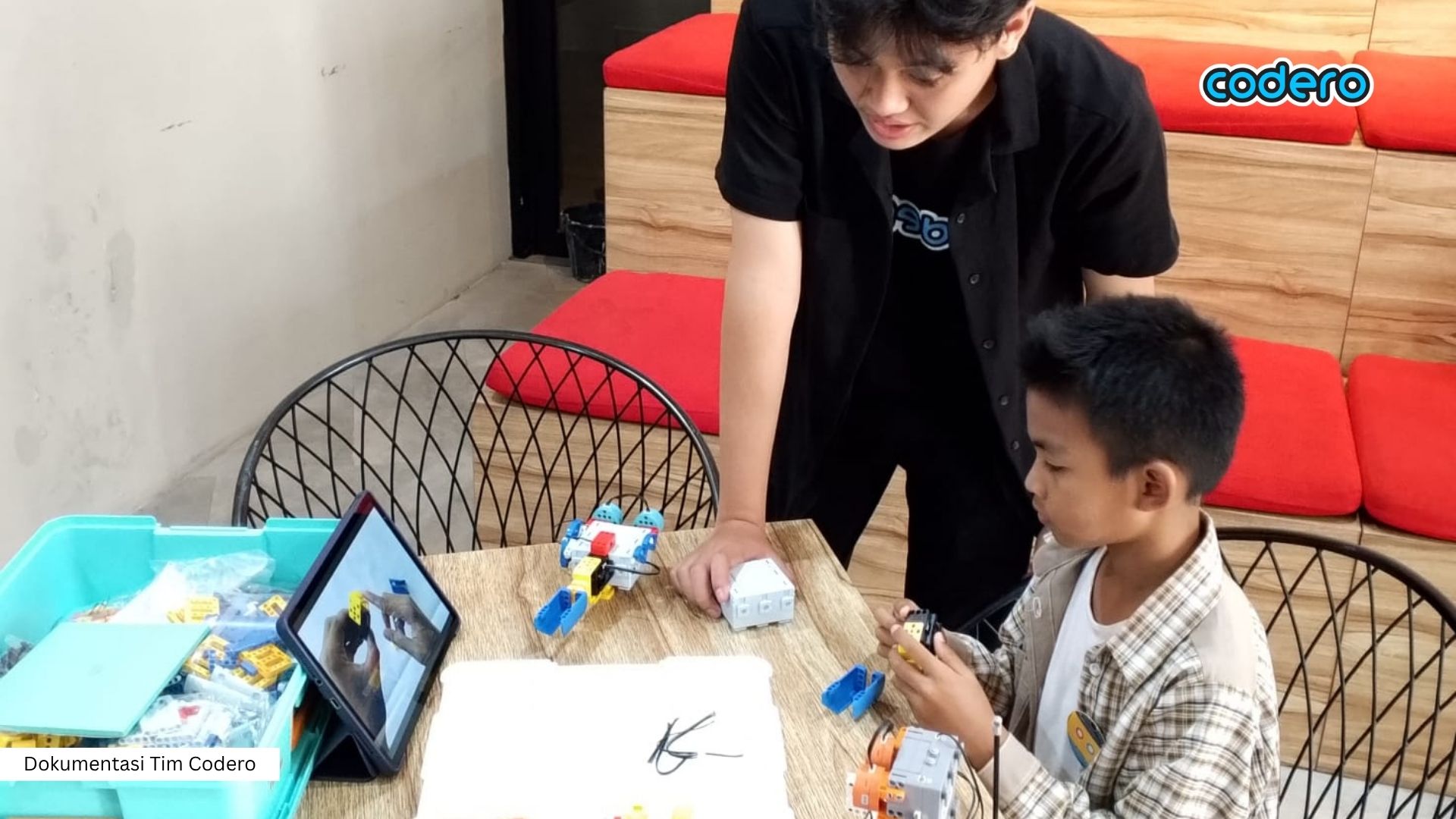
For building owners or coworking space managers, integrating a coding and robotics education center into your property is not merely a way to fill space, but a strategic move to become part of a digital economy cluster that supports the green economy. Supporting the vision of Indonesia Emas 2045 requires centers of educational excellence capable of cultivating future leaders.
We invite you to explore partnership opportunities with Codero in the field of technology education. By joining this ecosystem, you are not only investing in real estate assets but also investing in Indonesia’s future through tangible contributions to building a generation ready to face global challenges.
Codero serves as a partner in technology education, instilling logic, creativity, problem-solving, and confidence to prepare a generation ready for the future. We believe the best investment today is building a learning ecosystem with long-term impact.
Why choose a Codero partnership?
We understand that for investors, security and scalability are top priorities. Codero offers a proven system to support your success:
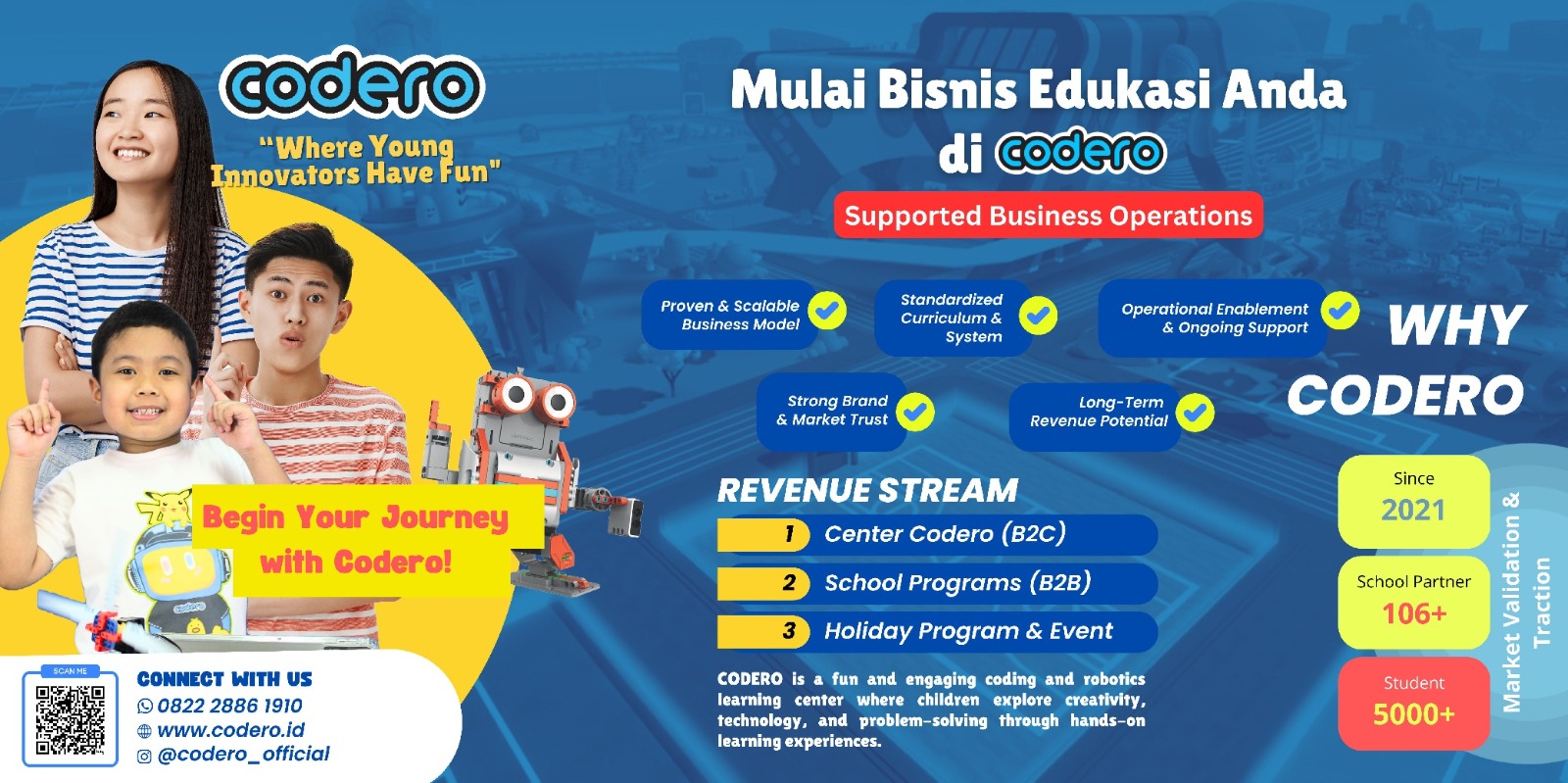
Proven & scalable business model: A business model strategy that has been validated in various locations, enabling rapid replication with minimal risk.
Standardized curriculum & system: Consistent teaching quality across all branches, ensuring your business maintains a superior reputation.
Operational enablement & ongoing support: We don’t leave our partners to fend for themselves. Training support and regular monitoring ensure business performance remains optimal.
Strong brand & market trust: Codero has built market trust in the tech education sector through collaborations with schools and educational institutions.
Long-term revenue potential: Amid high demand for digital literacy, this business model offers promising recurring revenue.
The best investment is one that grows alongside the nation’s progress. We invite you to explore how the Codero partnership program can deliver sustainable results for your business portfolio and assets.
Discuss your strategic partnership opportunities today:
👉 0822-2886-1910 (Ms. Jesslyn)
References:
Bridging the Digital and Green Transitions through Education
.jpg)
.jpg)
.jpg)
.jpg)
