
 Indonesia
 English



.jpg)
Indonesia’s education sector is currently on the cusp of a major digital transformation. As individuals dedicated to creating sustainable social impact, you surely understand that investing in young talent is the best way to ensure long-term economic resilience and national development.
Through collaboration between your company and children’s coding and robotics institutions under the Merdeka Belajar CSR program, the tangible contribution your company makes goes beyond mere compliance with social responsibility obligations. More than that, this initiative will serve as a key pillar supporting the successful implementation of the national curriculum in the future.
The following is an in-depth review of how this technology initiative can shape the character of the next generation while aligning your company’s social vision with the direction of national education.
Fostering Pancasila Values Through Lines of Code and Robotics
Within the Merdeka Curriculum, robotics education plays a highly strategic role. The activities of designing, assembling, and programming robots are not merely rigid technical tasks, but rather a medium through which children actively internalize the noble values of the Pancasila Student Profile:
1. Faith, reverence for God Almighty, and noble character
Through this ecosystem, students are educated to exercise ethical responsibility in utilizing technology. They learn to understand the social impact of an innovation so that the technology they create is used solely for the benefit of humanity.
2. Global diversity
The digital world knows no boundaries. Through this learning experience, students develop social sensitivity toward global issues and are encouraged to empathize in order to create technological products that simplify life for the broader community, regardless of background.
3. Collaboration
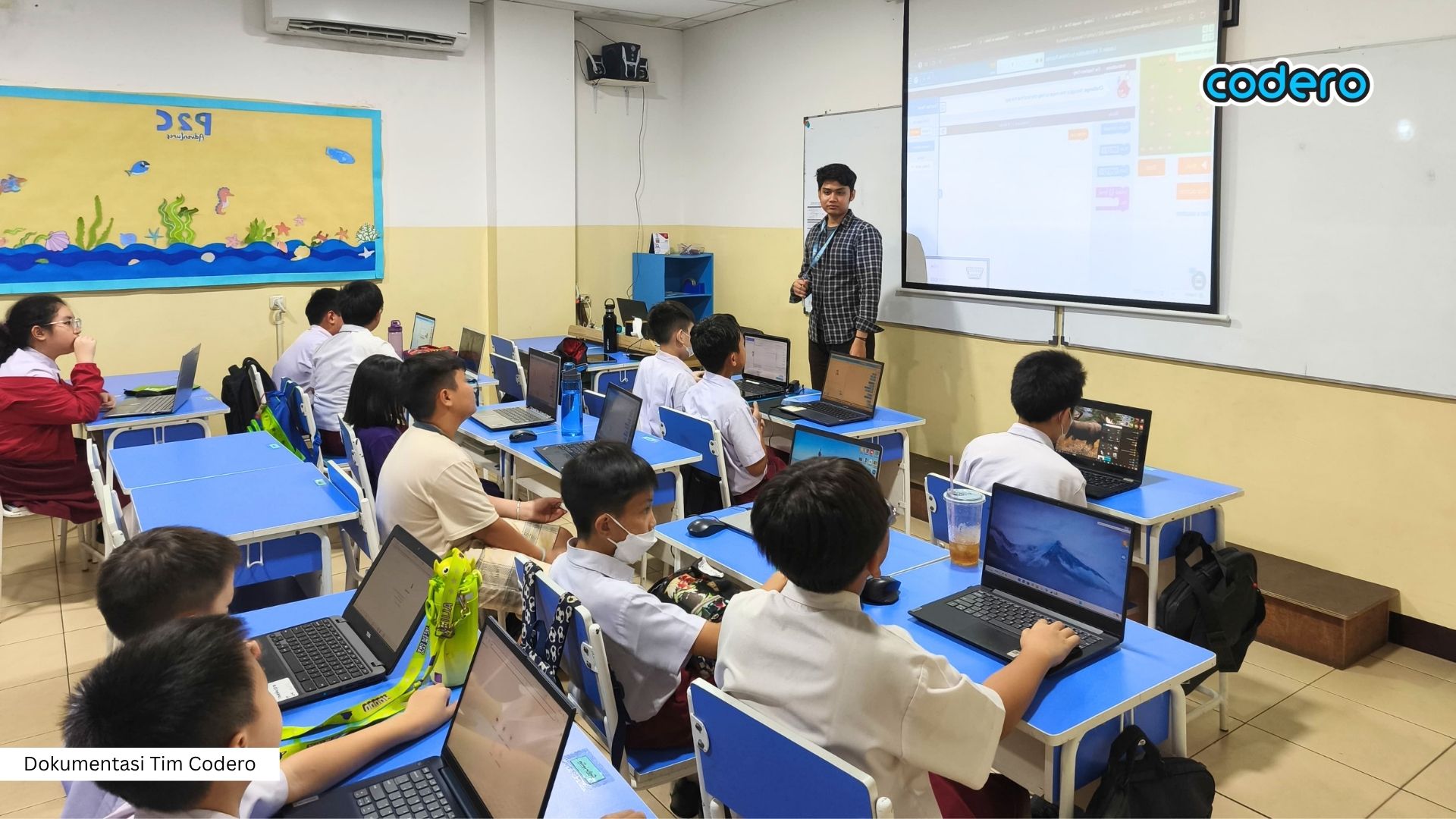
Robotics projects are not designed to be completed alone. In the classroom, students learn to share roles, engage in constructive dialogue, and collaborate to solve problems as a team in order to achieve a common goal.
4. Independence
The process of debugging in robotics encourages students to develop resilience, reflect on their learning process independently, and take full responsibility for the work they create.
5. Critical thinking
The challenges in the world of coding train students to think logically and systematically through the concept of computational thinking. They are required to analyze obstacles, break down problems, and evaluate solutions objectively.
6. Creativity
This learning experience opens up the widest possible space for children’s imaginations. Through the engineering design process, they are challenged to explore various alternative solutions to create original and practical technological innovations.
This synergy of values aligns perfectly with one of the main themes of the Pancasila Student Profile Strengthening Project (P5), namely “Engineering and Technology to Build the Unitary State of the Republic of Indonesia.” Through a learning by doing approach, this robotics CSR initiative for children transforms abstract theory into a concrete experience that shapes the strong character of Indonesia’s future generation.
Strategic Roadmap and Multi-Stakeholder Collaboration Model
By 2026, the integration of coding and Artificial Intelligence (AI) will have shifted from merely a trend to a fundamental necessity within Indonesia’s education system. According to the latest academic guidelines, this field has become an elective subject from elementary school through high school and vocational high school.
To capitalize on this golden opportunity, designing a robotics CSR program for schools at the start of the new school year is an ideal tactical move. Preparing the program well in advance through CSR collaboration for the new school year will ensure that partner schools are ready to embark on their digital transformation the moment school doors reopen.
Here are four strategic points for building a collaboration model that is both impactful and sustainable:
1. Golden triangle synergy (Companies + Schools + Expert Institutions)
To ensure the program’s impact is holistic, a well-defined division of roles is necessary:
Companies (CSR partners): Act as providers of funding and technological infrastructure, while also offering industry insights to ensure that the material taught remains relevant to the needs of the future job market.
Schools (Educational institutions): Serve as implementation hubs that provide a learning environment and integrate this program into both curricular and extracurricular activities.
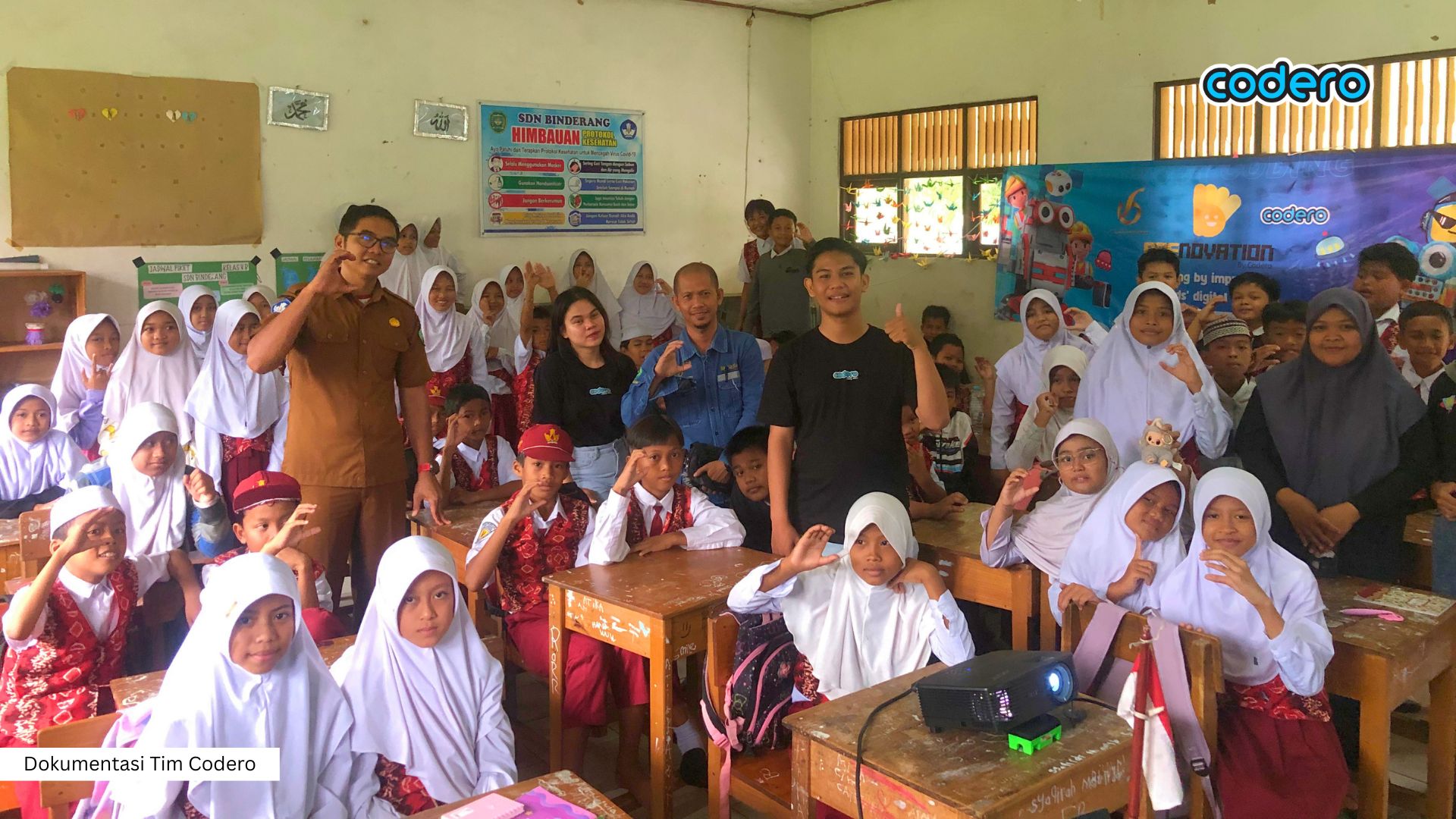
Coding/robotics course providers: Function as expert partners who develop technical curricula, provide supporting instructors, and ensure pedagogical quality aligned with children’s cognitive development stages. These roles have been implemented by Codero in collaboration with PT BRE to improve the digital literacy of students and teachers in Tapin Regency.
2. Equipment donation and teacher training (bimtek) scheme
The key to the sustainability of CSR programs lies in the readiness of human resources on the ground. Therefore, interventions should include:
Robotics equipment donations: Distribution of construction-based kits (such as LEGO or VEX) for middle school levels, or prebuilt programmable robots for elementary school levels. For schools with limited access to electricity or the internet, the unplugged coding approach can be a highly inclusive option.
IN-ON-IN training model: Building teachers’ confidence in teaching new technologies through intensive training with mentors (IN), hands-on classroom teaching practice (ON), and group reflection sessions (IN) to cultivate independent and innovative educators.
3. Documenting and publicizing impact to the public
Transparency and robust public communication are key to strengthening your company’s reputation (corporate brand image) in the eyes of the public:
Student project portfolio: Publish students’ real-world project outcomes (e.g., a waste-sorting robot prototype or a simple app) through engaging narrative videos or school technology exhibitions.
Data-driven evaluation: Use scientific measurement tools such as the Robotics Learning Self-Efficacy Scale (RLSES) to measure improvements in students’ self-confidence and interest in STEM fields in a quantifiable and objective manner.
Multimedia publications: Share the results of this periodic monitoring through the company’s social media channels, annual CSR reports (Sustainability Report), and the school’s digital platforms to showcase the company’s tangible contributions to transforming national education.
By taking action and collaborating now, your company will be recognized as a pioneer that plays a role in fostering a generation of young Indonesian innovators ready to lead the nation in competing in the era of the Industrial Revolution 4.0 and Society 5.0.
Work with Codero’s team of experts to design a high-impact CSR collaboration program that aligns with your company’s vision, creating a legacy that will be remembered by future generations. Discuss your CSR collaboration plans by contacting:
📞 +62 851-6116-0039 (Ms. Acha)
References:
Educational Robotics in Kurikulum Merdeka
Pembelajaran Koding dan Kecerdasan Artifisial, Fondasi Pendidikan untuk Masa Depan
.jpg)
.jpg)
.jpg)
