
 Indonesia
 English



.jpg)
How are you today, wonderful moms and dads? May you always be filled with happiness and a burning passion as you accompany your beloved children through every stage of their growth and development.
In today’s fast-paced digital world, we’re certainly no strangers to the terms “coding” and “programming.” These terms are constantly buzzing around us, touted as essential future skills that children should be equipped with from an early age.
But let’s be honest, for those of us without a tech background, these two terms often leave us scratching our heads, don’t they? Perhaps questions filled with curiosity have crossed your mind, such as: “Wait, are these two actually the same thing, or are they different?” or “So, which one should my little one learn first?”
Don’t worry, you’re not alone! Understanding the fundamental differences between the two in a simple way will go a long way toward helping us provide the most appropriate guidance and support to ignite our little one’s interests, talents, and spark of creativity.
So, no need to stress over imagining rows of complicated computer formulas. Let’s break down the differences between the two through a lighthearted story and language that’s super easy to understand!
Coding: The Art of Writing “Secret Recipes” for Computers
Simply put, coding is the process of writing commands so that a computer can perform specific tasks. Imagine a computer as a friend from another country who doesn’t understand our language at all. Well, coding is how we translate our wishes into a language the computer can understand.
Main focus: Typing commands word by word neatly and correctly so the computer doesn’t get confused when reading them.
Analogy: Imagine a chef who is focused on writing down a step-by-step recipe on a piece of paper, from how many spoonfuls of sugar to how many minutes to boil it.
Tools: It’s very simple; just use a standard text-editing app on your computer or tablet.
Programming: A Series of Processes from Idea to Finished Product
While coding focuses solely on writing commands, programming encompasses a much broader adventure. This process isn’t just about typing code; it’s the entire journey of creating a digital toy or app from scratch until it’s truly ready for your little one to play with.
This adventure begins with coming up with an exciting idea, designing the app’s structure, writing the code, checking for errors or glitches, and ensuring the app is truly user-friendly and fun to use.
Main focus: Developing logical thinking to solve complex problems, designing creative solutions, and managing the project from start to finish.
Analogy: If coding is the recipe writer, then programming is the restaurant owner or building architect. They not only know how to cook or lay bricks, but they also design the building’s structure, select the best materials, and ensure the house is sturdy, safe, and beautiful to live in.
Tools: It requires a more comprehensive set of tools, ranging from idea boards and testing tools to interconnected digital workspaces.
A Brief Summary of the Differences Between Coding and Programming
To make it easier to remember when you’re helping your little one learn later on, let’s take a look at the following simple comparison table:
| Differences | Coding | Programming |
|---|---|---|
| Scope of activities | A small part (the typing stage) of the process of creating a digital work. | The entire process, from brainstorming ideas to a finished, ready-to-use product. |
| Ultimate goal | Translating human intentions into a language computers can understand. | Creating a complete, useful, and ready-to-use application. |
| Main focus | Writing lines of instructions neatly and correctly, one by one. | Developing problem-solving skills and designing effective systems. |
| Skills developed | A basic understanding of the rules of computer programming. | Sharp logical thinking, analytical skills, and the ability to manage a project. |
What Are the Benefits for Children If They Start Coding Early?
Here are some of the incredible benefits your child can gain:
1. Sharpening logical thinking and problem-solving skills
Learning to code requires children to solve problems in the most logical way possible so that the programs they create work properly.
Naturally, they’ll learn to look at a problem, break it down into smaller, more manageable parts, and then try various alternative approaches to reach their goal.
2. Improving communication skills
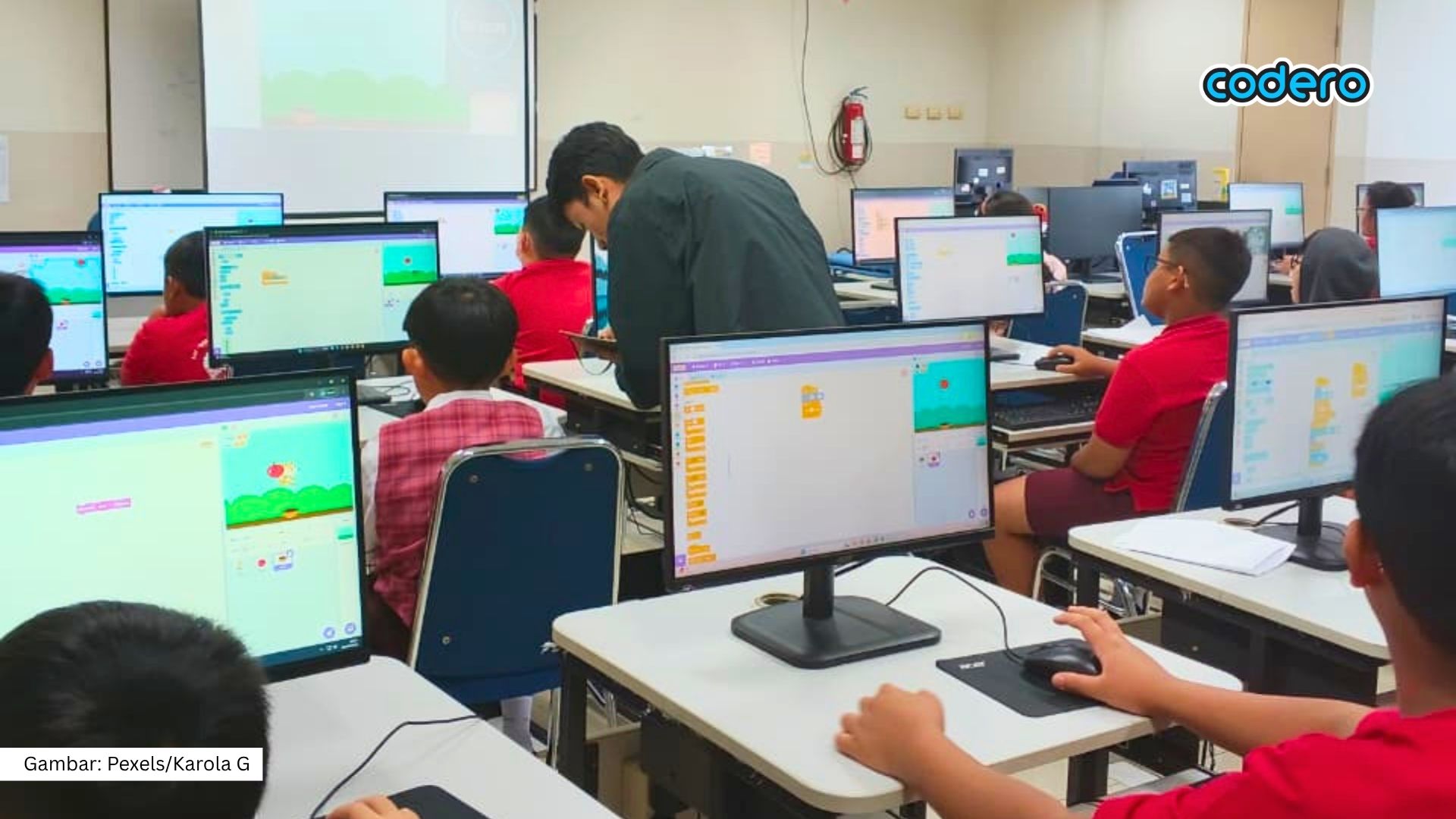
It may sound surprising, but learning to code and program can actually improve a child’s communication skills. “How can screen time actually help a child become a better speaker?”
This is because, when creating a program, children usually don’t work alone but rather as part of a team. They’ll learn to discuss and exchange ideas to find solutions to the challenges they face together.
3. Fostering creativity to create something useful
We certainly want our little ones to have a healthy relationship with technology, don’t we?
Well, instead of letting them just spend hours watching videos or playing games created by others, let’s challenge them to become creators themselves!
They can learn to create funny animated stories or simple games of their own.
Being able to produce something they can show off to their family will certainly give children a tremendous sense of pride and self-confidence.
4. Preparing for a bright future career
The world today is undergoing a massive shift toward the digital age. Equipping children with these skills from an early age is like giving them a long-term investment.
A solid understanding of technology will open so many doors of opportunity and provide an incredibly broad and promising range of career options when they grow up.
Learning to code and program isn’t just about learning computer languages or forcing them to become computer experts at a young age; it’s an investment in sharpening their thinking skills, unleashing their imagination, and building their confidence as they face the future.
We hope this information is helpful and further strengthens your resolve as parents to support your beloved child’s interests and talents!
References:
Apa itu Programming? Manfaat dan Bedanya dengan Coding
Bagaimana Cara Belajar Coding? Tel-U Punya Jawabannya
Coder vs Programmer: What’s the Difference?
.jpg)
.jpg)
